Showing posts with label mario. Show all posts

Friday, July 18, 2025

using around

I know it sounds like a detail, but trust me: if your game is lacking a "navigate around the corner of a block", it will significantly impede the gameplay. In some kind of games, it may even *ruin* the gameplay

I did not have it in Bilou RPG, and that meant you would be stopped as soon as your character slightly enters a solid tile. Sure, you can reduce the annoyance by making the box of your character smaller than its appearance on-screen.

You can also keep moving along one axis if the other is impossible. That's what's happening in the 'tutogit' demo, but you can spot times where the character suddenly stops and must be pushed again in another direction. It doesn't feel like how a professional game would behave.  

Super Mario World repousse Mario d'1 pixel par frame si le joueur est un peu trop proche d'un bloc lors d'un saut, autorisant jusqu'à 4 pixels de "débordement" avant de faire rebondir Mario plutôt que de le rediriger. ça n'a l'air de rien, mais c'est le genre de petit détail de gameplay qui fait qu'on peut se permettre des niveau un peu plus chauds sans réserver pour autant le jeu à une élite de speedrunners surentrainés. C'est ce qui faisait en '90 la différence entre Super Mario Bros et Great Giana Sisters.

C'est le genre de subtilité que je n'ai pas pu me permettre avec mes jeux BASIC et qui faisait pester les testeurs potentiels parce que le saut s'interrompait net alors qu'il passait presque. Le genre de subtilité avec lesquelles RSD Game-Maker ne s'embêtait pas et qui explique que Badman puisse filer le long d'un plafond défiant la balistique.

Le problème existe toujours avec GEDS, que ce soit en stoppand net le père Noël de la démo git ou en vous freinant pour rien pendant une ascension périllieuse dans le niveau secret de School Rush. Et donc, depuis aussi loin que j'ai un cahier-agenda, j'ai une page avec une petite note sur ce qui pourrait permettre de se coder ça pour le prochain jeu Bilou. Une page généralement couverte d'interrogations et assez pauvre en idées...

So as you can guess, I'm trying to find a solution to make that work with Bilou in my next game, but to be honest, there haven't been many ideas on the many pages dedicated to the topic in my notebooks. Then two things happened more or less on the same month. I've watched Wye's video showing the interaction points for Super Mario World and I got the idea of having a dedicated state for navigating around a block in my game engine. Which came first, I couldn't really tell any more. Unfortunately.

See, the idea so far was to have an around controller that would be part of the chain of micro-behaviours when Bilou's jumping. But what if we keep that chain unchanged, let the FAIL condition happen, and then check the testpoint and decide whether we could try moving around the blocking ceiling or not.

Mais ça va peut-être enfin changer si je prends le problème par un autre bout: plutôt que de faire un contrôleur qui anticipe la collision et déplace le joueur pour éviter que le contrôleur gravity ne signale un échec, je pourrais utiliser un contrôleur capable de nous diriger pour nous remettre dans l'axe après que la collision ait été détectée.

Une fois qu'il est à nouveau possible de monter, le contrôleur around nous en informerait par un évènement et on en profiterait pour restaurer la vitesse de Bilou au moment où il avait cogné le bloc.

We wouldn't try moving around if a testpoint located above Bilou is in a wall. That's the equivalent of Mario's head interaction point.

  • The new controller would tell us whether to align left or right by acting instead of the dpad controller.
  • It could report a failure if we're too far away for alignment or if we still cannot keep jumping after alignment happens -- that never happens to Mario because he's a bit narrower than one (16-pixels) block, but tiles in Bilou's world are 8x8.
  • It wouldn't have to compensate for vertical speed or gravity because you'd use it in a state where gravity does not apply.
  • It would fire an event once alignment conditions are met 

Granted, the behaviour will not be frame-perfect that of Super Mario, but it could be satisfying nevertheless, so it's worth giving it a try, imho.

Chose amusante: le point de "repousse" se trouve au niveau du nez de Mario. Notez que même une fois réaligné, le sprite déborde toujours par-devant le bloc. Et le point qui teste si sa tête a rencontré un bloc est pile entre ses deux yeux.

Bien sûr, avec l'approche que je propose, on aura pas le même comportement à la frame près: Bilou marquera un temps d'arrêt le temps qu'on le repousse. Il faudra tester ce que ça donne pour voir si c'est gênant ou non. Au pire, on ajustera un peu avec l'animation ...

So why reinventing the wheel, you wonder ? why insisting on using cando() while interaction points make things simpler ? well ... because the wheel of Super Mario World is far from being flawless. The gameplay it leads to may be an ideal to reach, but the quality of implementation belongs to the past.

Saturday, July 12, 2025

Mario in Godot

Refaire Super Mario World dans le game-maker "Godot" ... j'ai envie de dire à la fois "tout ça" et "rien que ça". Pourtant, l'idée de Wye n'est ni de proposer un Mario World Studio ni son Mario World 3. L'idée, c'est de comprendre le fonctionnement du jeu d'origine en le reconstruisant dans un nouvel outil tout en apprenant l'outil lui-même. Et ça, ça me parle. C'est le genre de bouquin que je dévorerais mais ici, ce sont des vidéos youtube.

"In Super Mario World, Mario was considered fully underwater if both his head and body interaction points are touching water tiles. [...]

That's the kind of things you can learn by watching Wye's series on re-making Super Mario World in Godot, and learn how to use Godot in the process

I've been following the videos roughly since episode 1 or 2, but as Wye now address the water physics, I cannot just remain a silent watcher. I've spent too much time working on water physics myself, and I need to compare the approaches. Of course, Mario isn't using the "cando"  function. Instead, interaction with the world are guided by "interaction points" which remember the type of tile they're on. So for instance, 

"When Mario body is in the water but not his head, that means he is near the surface."

Du point de vue des collisions avec le niveau, Mario n'est pas une boîte. Il est ... une sorte de constellation de points qui ont chacun leur préférence sur le type de terrain 8 en tout, mais dont certains ne seront évalués que dans certaines conditions. Pour déterminer s'il faut nager ou non, ce sont par exemple ce sont les tests du milieu et de la tête qui entrent en ligne de compte. Et pour déterminer si on peut sauter hors de l'eau ? Bin il faut que le corps de Mario soit dans l'eau mais sa tête hors de l'eau. On évite en fait les complications du type "la surface est à la fois de l'air et de l'eau" dans lesquelles je me suis embarqué.

And only when Mario is near the surface is it possible to jump out of water ... and only if pressing UP in addition to pressing the JUMP button ...

The concept of interaction points comes from the disassembly of SMW itself and was discussed in an earlier video. They replace hitboxes when it comes to interacting with the world and there are 8 of them for Mario. But as usual with 16-bit games, not all points are tested on every frame. What is interesting is that rather than testing e.g. "left side" when moving left, the game tests "left side" only if the left side is "smaller" than the right side, as a way to detect "new" things, assuming that what covers most of Mario's box has been tested in the past. "When Mario is on the right side of a tile, the two points on the left are ignored" is possibly a better way to describe what happens, indeed ^^".

I'd be curious to find out to what extent that keeps working where your level grid isn't exactly one hero wide ...

edit: while you need to *press* the jump button to make Mario jump when he hits the ground from a fall, you just need to be *holding the button down* when reaching the water surface to trigger "jump out of water".  (from the "extra bits")

Monday, March 24, 2025

#20 games, part 2

There has to be some Super Mario in my unsorted list hash of 20 most influential games... Given that we're only considering 20 games, it was also clear that I would likely keep only one of them. That *had* to be Super Mario World. The original one, on Super Nintendo. There are countless qualities in other Mario titles, but SMW is *the one* I wish I could be playing everytime I feel so. So that was game #5.

Pour vous, lecteurs de ce blog, voir un Mario apparaître dans la liste des 20 jeux qui m'ont marqués devrait être évident. Avec "seulement" 20 jeux, c'était clair qu'il fallait que j'en choisisse juste un, et que ça ne pouvait être que Super Mario World. Aucun autre avant ni après lui n'a aussi bien utilisé Yoshi. Aucun autre ne m'a à ce point marqué par ses choix graphiques au point que je chipe sa carapace de koopa comme icône pour mon terminal. Ils ont assurément leurs qualités propres, mais c'est à SMW que j'ai envie de rejouer.

It might be surprising, but I also wanted to include Zool. Because it's the pre-dever' embodiment of a game where you're in the middle of living objects. People often point out Rayman when they see School Rush, but you won't see any walking pencil or bouncing eraser in Picture City. They would definitely have worked in Zool.

Bon, ça vous surprendra peut-être que j'aie repris Zool dans cette liste. Lui, ça fait des décennies que je n'y ai pas joué, et je dirais que je le vis bien. Mais y avoir joué en 1993 a été déterminant pour la construction du monde de Bilou. Pas sûr qu'il y ait eu une School Zone s'il n'y avait pas eu Zool pour nous montrer la voie.

Si les environnements de Bilou ont du Zool dans le sang, le personnage lui-même n'a pas grand-chose en commun. Bilou serait plutôt un cousin de Coolspot de ce point-de vue là (11eme jour du challenge). Au point que dans la version BASIC, l'affichage indiquant le nombre de vie restant montrait Bilou plus ou moins tranquille d'esprit, un truc directement inspiré par la "pastille qui se décolle" du HUD de Coolspot. Par contre les environnements de Coolspot sont un peu trop "normaux"

You'll note that Bilou as a character is very unlike Zool, but there was another major platformer outsider in '92-'93, and that was Coolspot. Simple geometric shape with feet and hands, defined mostly by its animation... When you realise that one of Bilou's power-up implied shades, you won't be surprised if I tell you Coolspot's health meter inspired a "1-UP count" in the BASIC flip-screen platformer where you can read Bilou's anxiety regarding the lives left on his face.

Comparatively, Rainbow Bells Adventure seems to have been only lightly inspiring (apart from "Pipe Zone" music in my head). Yet, I've been hunting for ways to play that game for years. To the point where I couldn't write this post without trying to install an SNES emulator on my NDS and try running Twinbee there. Oh, it was the first game I've played where you could cummulate power-ups (where Mario would insist on swapping them).

Le jeu du 7eme jour conclut à merveille ce batch: Twinbee Rainbow Bell Adventure. la pépite qui n'a pas été rééditée, dont on a pas les sources ... au point que tout en faisant le challenge, j'ai fini par m'installer une version plus récente de SNemulDS pour le faire tourner sur DS... et il tourne. On ne va pas se mentir, on sent qu'on est émulé et l'émulateur n'est pas d'une stabilité exemplaire ...mais il est bel et bien là ;-) Son impact sur Bilou, il aura fallu attendre (à part la musique pour la "pipe zone"), mais si on peut cumuler les power-up dans School Rush, c'est bien grâce à lui.

Saturday, August 24, 2024

game design with Super Sunny World

There is a NES game in the making. Yes, a new one. A homebrew, of course. There are quite a few ongoing, actually, but this one features artwork from Kenneth Fejer ! and aims at cloning the gameplay of Super Mario Bros in a different setting. And I must admit I'm loving the simple charm it has, and I've been using Matt's posts on Super Sunny World as a sandbox to toy with game design ideas since March '23 the same way I did with Cyber Shadow a few years ago.

Matt proposes "grow up" power that sits still and "fire" power-up that slides away (like a SMB mushroom). Personally, I feel like both sliding and sitting idle do not fit the power-up personalities. I'd like the "grow-up" flower to have a little motion. To make it easier to grab than Mario's mushroom, it could be floating down towards the player. (post-thought: that might be luring a bit too much into Leilani's Island gameplay ^^")

Also, it feels odd that the pearl slides since it is in a shell but if it was a bare pearl, it would perfectly work to see it rolling away. I'm afraid it moves a bit too fast now and I'm unsure you could catch it unless you realized that you can run, which most young player won't. And even if it is only barely faster than yourself, 

Another follower, XPascalou, points out that In Super Mario Bros, players have to work to get their power-ups. It is not "free". Players have to master "run & jump" to catch the mushroom or the star. The star is even harder to catch because it gives much more power. That's true, but level designers put some surrounding elements so that early mushrooms are redirected towards you. (that would be interesting to study SMB1 maps to see how often that happens and when the games start making you take risks for a mushroom, then compare that with SMB3 and Giana Sisters)

Sometimes, it's just a tiny interaction, like when Matt announce he has adjusted the "hit range" for going down tree trunks, and now allows the player to trigger the transition when "duck sliding" across the top. But by all the hours spent on Super Princess Peach ... Thank you, Matt.

Sometimes, there's more meat, like when Matt wants to introduce a cousin to the snail (his default koopa-like creature). But as much as I love its look, with spikes-like on the shell, it looks more like it's deadly to jump on its head and seeing it shielded against shots was a surprise. (I guess I must unlearn to think of them as fireballs ^^"). It would be nice that the shots would slightly bounce them backwards (unless they entered the "stick to the ground" state after they bounced once, possibly).

Of course, for a programmer, it's always nice to get crusty details about what did not really went right, like how initially, shots would be "swallowed" by blocks 1 tile about the ground. Especially because that feels like something the Giana Sisters would have featured, and thus gives a new light on why there were such weird behaviours in that game.

It's nice to see other platformer authors come up with creative alternatives like waterfalls we can swim in ... rather than artificial ladders or elevator that would have felt out of place in the Sunny's world setting. +1 for using white clouds at the bottom of waterfall only when it is swimmable (it wasn't the case initially, and it will definitely help distinguish interactive and decorative waterfalls). I think mixing swimmable and non-swimmable waterfalls will be very demanding for non-expert players and should only be done if there's plain ground to catch us if we're confused. The way that waterfall is placed in the level perfectly introduce the mechanics in a no-tuto way, too ^_^

And then there are the cases where Matt's post make me think "uh. No. I wouldn't do that in my own game", like with the fishes:

fun twist on the "flying cheep cheeps" 🐡 for my NES game, Super Sunny World 🌞! Instead of just jumping and falling, they land and slide across solid surfaces. Maybe I should replace the fish sprite with a penguin sprite

Maybe they could either slow down and become immobile hazard on the ground or fall back through the ground once they are done bouncing ? I like them being fishes. Sliding penguins only work with slippery ground (and well, so could fishes, if ground is slippery) oh. Or they could slide to a stop, then miserably try to avoid you with ridiculously small jumps. Possibly jumping faster if you approach them.

I could try it, but my plan it to have 3 of those active at the same time, at all times, so my instinct is the keep the movement very linear and consistent, to allow the player to more easily track 3 moving enemies flying around the screen.

Okay, a last one, because that was on my blog-me list for such a long time:

Did you ever notice: In Mario 3, if you hit a block that bounces up, it pushes mario downward faster than if he hits a solid block?

I noticed that while playing "Croc World" demo which was lacking it. It felt cheap. I think Mario's Y speed is reverted while bouncing on an active block. On a solid block, the speed is simply set to 0 so it takes a little time to start falling down. Note on Matt's video how the same question block is active when flashing and just solid once empty. That surely contributes to how the game communicates what is interactive and what isn't.


Saturday, June 22, 2024

SMBW: comme dans le jeu du blob

J'ai bien souri quand j'ai vu la gelée quelque part dans les mines fongiques de Super Mario Wonder: un clin d'oeil bien vu à une mécanique jusque là unique d'un niveau de Super Mario Land 2.J'ai souri encore quand Mario s'est vu changé en blob à son tour, collant aux plafonds (comme avec le très réussi power-up foreuse) et suivant le parcours sur les murs ...

Vous pensez bien que quand J.L.N est arrivé là-dedans, il est parti dans un "wouahh. C'est génial! On peut aller Partout!", parce que évidemment, la mécanique est entièrement neuve dans la série Mario. Enfin, il y avait quand-même un peu de ça avec la super-étoile dans Yoshi's Island et il a joué à des niveaux de Rayman où on court sur les murs, mais dans les deux cas, si on s'arrête, on tombe, alors qu'ici on a tout le loisir d'explorer le niveau pendant qu'on colle au mur...

My son was all hype when he discovered that Mario could turn into a blob and slide on walls. Something unprecendented in the Mario series (well, the super-star of Yoshi's Island works a bit like that but hasn't played them), and unlike the run-on-walls in Rayman Origins/Legends, he can stay on wall/ceiling even if he stops moving to avoid obstacles.

Personnally, I discovered it with a déjà-vu smile. There was an Amiga game featuring a blob sliding on walls as main character. I had seen that in a magazine, but I couldn't recall its name to check. I called tweeters for help, and eventually stumbled upon a XXth-century-like website hosting the list of all the 90s video games featuring a blob.

Mais moi, ça m'a surtout rappelé une vignette dans un vieux magazine de l'époque Amiga. Sauf que pas moyen de me rappeler son nom pour vérifier. j'y avais repensé au moment ou "the blob" est sorti, quoi qu'en réalité le gameplay serait plutôt à rapprocher de Super Morph auquel je n'ai pas joué non plus (mais j'aurais bien voulu).

Ce n'était pas non plus Super Putty, toujours dans la catégorie "plate-forme avec un blob bleu", mais bien Globdule, un jeu de Psygnosys (!) tout en rampes et en arrondis avec un blob bleu qui est mauve, apparemment... tout en glissades et en adresse.

Et si j'ai finalement remis le doigt dessus, c'est parce qu'un internaute maîtrisant le japonais a un jour décidé de faire un recensement de tous les jeux 8-bit et 16-bit où on contrôle un blob. Eh oui. C'est ça aussi Internet...

So I could finally identify Globdule by Psygnosis as the game I had in mind

Saturday, April 06, 2024

SMBW: Retournement

Une des premières mécaniques que j'ai vraiment appréciées dans Mario Wonder, ce sont les roulhippos. Je les range dans la même catégorie que les wallcreepers de Link Between Worlds ou le liquide rebondissant de Sonic Mania: on prend un élément de gameplay qui a bien cassé les pieds des joueurs sur les 30 dernières années et on lui donne enfin la possibilité de prendre sa revanche.

Et ici avec ces hippos mauves qui n'auraient pas dénoté dans Super Mario Land 2, c'est carrément sur les trous-sans-fond que Mario prend sa revanche ... c'est à dire sur son ennemi n° 1: la gravitation. Et pas qu'un peu puisque les trous ainsi bouchés se transforment en tremplins particulièrement puissants.

First wonderful mechanics in the game is the rolling hippos, and how they transform something truly annoying (bottomless pit) into something fun to interact with (a bouncy area). This is the same kind of flip-the-challenge move that was happened with the blue liquid of Sonic Mania, but it's of course something Nintendo people themselves are familiar with since this reminds the wallcreeper remastering of Link Between Worlds. Many further "wonders" of the game will also act as flippers, like allowing to walk on the background or ride / swim lava.

Monde 1 oblige, envoyer promener un hippo est plutôt simple: il suffit de lui sauter dessus. Notez au passage que s'ils peuvent se montrer piégeux (cogner un hippo renvoie Mario assez fort en arrière), ils ne sont pas blessant, chose plutôt rare au royaume champignon fleurs.

Mais les Roulhippos ne sont pas le seul moment où ce Mario Wonder renverse les règles, et les "prodiges" seront une occasion pour fournir ce genre de plaisir au joueur, comme ici où Yoshi se retrouve non seulement immunisé contre le feu mais aussi capable de nager dans la lave et d'utiliser les coulées plus denses comme des plateformes mobiles...
 

Sunday, March 31, 2024

It's a wonder

Bon, on s'était fait un deal avec mon frangin: il ne craquait pas pour Super Mario RPG et je ne craquais pas pour Super Mario Bros Wonder. Et comme les cacahuètes de Noël n'étaient pas en notre faveur, on se les offrait comme cadeau d'anniversaire. Je découvre donc le jeu avec 4 mois de retard sur ceux qui l'ont pré-commandé.

On ne va pas se mentir, il y avait pas mal de chose qui ne m'avaient pas convaincus dans les trailers. Mario-éléphant ? Peach-éléphant ? des fleurs bla-bla partout ? des tuyaux qui se changent en chenilles ?

There were numbers of things that did not convinced me at all in the Super Mario Wonder trailer. Like oliphant morphs (esp. for Peach, but Mario looks silly that way too), pipes turning into worms and chit-chat-flowers. But we made a deal with my brother: he wouldn't buy Mario RPG and I wouldn't buy Mario Wonder because we'd offer them to each other.

So since his birthday comes about 3 months earlier than mine, I'm discovering the game quite late compared to those who pre-ordered it. I did have a few hours to try it at my bro's place (yeah, the deal did not imply that *he* wouldn't buy Wonder for himself, and that's what happened at Xmas :P), and playing a few levels convinced me that there was a gold mine of gameplay ideas to spelunk there. And of world building ideas, because those wave-shaped islands and clouds are SMB3-level genious.

Mais un premier test manette en main à l'anniversaire de mon frère m'avait convaincu qu'il y avait aussi plein de bonnes idées de gameplay à creuser là-dedans. Et des idées de décor, parce que ces îles et nuages en forme de vagues pour le monde des îles, c'est digne de SMB3.

Fil à suivre...

edit: bon, on ne peut pas dire que je sois fan de la bande son, par contre.

Sunday, November 27, 2022

Tué par la caméra

C'est devenu un problème récurrent pendant que je progresse dans les niveaux de Super Mario 3D World: tôt ou tard, je finis en-dehors du niveau, et régulièrement, c'est suite à un mauvais mouvement avec le stick-caméra.

Le jeu a fait le pari d'un mélange 2D/3D qui (globalement) marche plutôt bien. la perspective montre une généreuse partie du sol, ce qui autorise la création de "salles" dans lesquelles les quatre joueurs peuvent aller et venir, coopérer ou entrer en compétition. La manipulation des personnages y est d'ordinaire plus proche d'un Link's Awakening Switch que d'un Super Mario. ça, c'était prévisible. Elle est aussi plus proche d'un Link's Awakening Switch que d'un Mario 64, et ça, ça vaut peut-être la peine qu'on y regarde de plus près.
Dans Mario 64, le personnage peut normalement prendre n'importe quel angle sur le stick. Le contrôle est doublement direct (pour reprendre le terme défini par Kirby Kid dans The Coefficient of Clean ): la direction du stick s'applique directement à l'orientation de Mario et l'amplitude du stick s'applique directement à sa vitesse (ou à son accélération ... ma mémoire du jeu me joue un tour). En comparaison, les mouvements de Mario dans 3D World sont confinés aux 8 directions accessibles à un D-Pad, comme si le jeu avait été conçu sur SNES.

It keeps happening again and again as I play Super Mario 3D World : sooner or later, I end up out-of-path and die. And most of the time, it is because accidentally I hit the camera-stick. I believe the core issue about it is linked to the 2D/3D gameplay mixture at the core of the game -- which for most of the game works quite well. The default perspective shows a good deal of the ground, creating room where the 4 players can come and go, cooperate or compete. Character control is looking more like Link's control in the Switch Link's Awakening game, with 8-directions (as if the design had happened on SNES pad) rather than direct-orientation direct-amplitude control used in Super Mario 64.

En soi, le 3D world étant principalement consitué d'objets alignés sur une grille cubique, c'est un excellent choix de design: quand il va y avoir une passerelle un peu étroite à franchir, le joueur aura toujours moyen d'être pile dans l'axe où il ne se met pas à tomber au bout de trois pas. Mario 64, au contraire, était construit avec des polygones "libres". Une passerelle pouvait se trouver sous n'importe quel angle entre deux plate-formes qui adoptaient une géométrie polygonale quelconque (croyez-en un vieux qui y a joué au pavé numérique sur émulateur, et qui donc devait zig-zagger dans ce genre de situation)

Although Link-like controls are surprising at first, they work fairly well, and that is mostly (imho) because every object in SM3DW is aligned on a cubical grid. SM64 instead used polygons much more freely with any-angle (narrow) platforms here and there, asking for precise adjustment of Mario's direction to avoid zig-zagging. Discretised directions in SM3DW work well with discretised world objects which works fine with the original SMB blocky world design. Next they discretise camera angles by 45° as well. Maybe that's where things get me killed.

Les mouvements de caméra eux aussi ont été discrétisés. On regarde de face, de profil, ou sous un angle de 45° entre les deux. Un léger mouvement du stick droit de la switch nous fait basculer d'une perspective à l'autre dans un mouvement adouci dans le temps mais déclenché d'un coup quoi qu'il en soit. Et ça, en jeu solo, ça fait mal: le stick caméra est alors normalement sous les 4 boutons d'actions. Le moment où vous avez le plus de risque de l'accrocher par mégarde, c'est au milieu d'un saut un peu long. Pour peu que vous soyez dans un niveau qui reproduit en réalité un parcours 2D dans un moteur 3D, il ne faudra pas longtemps pour que ce changement d'orientation se traduise par un changement de la trajectoire de Mario (la direction imposée par le stick est relative à la vue, pas à Mario lui-même, or la vue vient de changer). Le temps de s'en rendre compte, il est trop souvent trop tard pour réagir et on aura au mieux le droit à 2 ou 3 wall-kicks pathétiques avant de ouahaouhouahouahoahahahahaaa au fond du niveau.

You usually have the camera presented so that level goes left-to-right as in a SMB level, but with a short knock on the right-controller stick, you can trigger a responsive-yet-smoothed 45° turn of the camera. And with the camera stick being just below the RUN and JUMP button, it plays trick on me when I'm doing a solo session: most of my accidental camera turns happen in the middle of a long jump. And since the direction of Mario is relative to the view rather than to the world, I'm suddenly heading out of the screen. If that jump happens in one of those level that actually implements a 2D course with 3D objects, that 'out of screen' actually means 'into the bottomless pit that is everywhere around'. Remember how often you thought about a 2D platformer that "that pirhana plant sure inst' as wide as the road!" ? Here you can definitely sneak behind the plant, but you also can fall off the road any time. You'll be granted a few pathetical wall-jumps before dying if you're lucky.

Et pour ne rien arranger, le jeu nous met sur la même input (stick directionnel vers le haut) deux mécaniques: avancer vers le fond de l'écran ou grimper vers le haut. On casse ici le principe d'individualité des contrôle (chaque mécanique a son morceau de manette qu'il ne partage avec aucune autre mécanique, toujours d'après le lexique de Kirby Kid).

Dans la plupart des niveaux, c'est plutôt un bon compromis: ça rend le fait d'escalader un mur spontané par rapport au déplacement sur le sol bidirectionnel, de même qu'il paraît naturel d'utiliser le DPAD vers le haut pour monter les escaliers dans un Zelda 2D (et si on avait pu y escalader les montagnes, ça aurait marché aussi). Mais revoilà les niveaux linéaires où les traceurs de parcours ont décidé de nos faire profiter de la vue splendide sur les nuages en arrière plan plutôt que de nous coller un mur devant les yeux. Soit.

As if it wasn't annoying enough, pushing the direction stick up triggers two different mechanics: it makes you walk farther away from the camera, and it let you climb up. So much for controls individuality (another coefficient of clean control identified by Kirby Kid). It is a quite nice mapping in many levels: it makes climbing a wall natural in a world where 2D floor is used, the same way pushing a DPAD up feels natural to climb up stairs in a 2D Zelda game. But then came the sideways athletic levels again, where designers wanted us to enjoy a beautiful clouds background rather than a boring wall. As soon as you add a climbable obstacle in that setup, Mario will switch from climbing to "visit those beautiful clouds far far away" in no time once you're at the top of the obstacle. 

Sauf que si vous ajoutez une grille à escalader (direction vers le haut), une fois Mario arrivé en haut de la grille, vous avez assez peu de temps pour relacher la direction 'vers le haut'. Faute de quoi, vous irez dire coucou aux jolis nuages d'un peu plus près. "Dommage", comme dirait Bowser. 

Notez que les concepteurs ont réalisé qu'il y avait un problème, et qu'ils ont ajouté une grille-de-fond par-derrière la grille-à-escalader. ça rattrapera le J.L.N qui avait mis uniquement son stick vers le haut (et donc ira s'accrocher à la grille du fond une fois arrivé en haut de la grille-qui-bouge), mais pas le papa qui avait maintenu haut et avant simultanément dans une habitude d'optimisation des mouvements sur les lianes de la Jungle Jaja.


Notez aussi que le problème ne se limite pas aux niveaux sans mur en arrière plan. Ici, par exemple, on est supposé se promener en rebondissant sur les fourmis invincibles tandis qu'on passe par-dessus des pics. Fort bien tant qu'on ne se met pas en tête d'utiliser la 3eme dimension pour aller s'accrocher au mur avec le costume de chat. Parce qu'en réalité il y a un espace de la taille d'un Mario entre les fourmis et le mur, donc vous pouvez parfaitement vous retrouver à les louper parce que vous êtes par-derrière alors que ce tronçon de niveau est conçu pour être joué sur un seul plan. Et vous pouvez aussi vous retrouver à tomber par-devant le niveau suite à un rebond mal calculé sur le mur du fond, naturellement.

And unfortunately, that not only happens in levels where there is no background walls. In that last video, Mario is expected to bounce around from one invincible ant to the next, which can conveniently walk in spikes. Perfect as long as you don't try to use your shiny cat costume to explore the 3rd dimension and climb the wall for a shortcut. If you try that, you're most likely going to miss the next ant because they aren't wandering just next to the wall, but one Mario away from the wall. You are perfectly able to be between monsters and the "save"-your-life wall. And you can still fall by going towards the player after you (accidentally ?) wall-jumped against that background wall.

Sunday, November 06, 2022

Super Mario Bros 5

Ai-je eu raison de snobber Mario Maker ? jusque là, je n'en doutais pas. Parce que jusque là, les niveaux présentés étaient essentiellement des niveaux quasi-impossibles ou des productions fafelues avec des canons à Bullet-Bill accrochés sur le dos d'un parakoopa qui lancent des spineys ... ce genre de choses. Mais l'ami Antistar nous a annoncé il y a quelques jours qu'il allait tenter de traverser un jeu qui a retenu mon attention: Super Mario Bros. 5.  

Il s'agit toujours bien d'un titre Mario Maker, mélangeant essentiellement les thèmes SMB3 et SMW (miam) dont l'auteur cherche à rester fidèle à l'esprit des jeux de Nintendo tout en proposant des idées et du contenu original.

Replay Twitch du 29/09/2022 avec un let's play de Super Mario Maker 2 dédié au super monde "Super Mario Bros. 5" conçu par MetroidMike64, qui contient 8 mondes de 5 niveaux chacun. En voici le code : 0G9-XN4-FNF Session de jeu effectuée et streamée depuis une Nintendo Switch.
Maybe I should have installed Mario Maker2. Well, I've had no reason to install Mario Maker (1) on my switch so far because the levels available were essentially nearly-impossible (kazio?) traps or patchwork productions featuring bullet-bill-canons piggy-backed on parakoopas that spawn spineys (or something of that kind). But French journalist Antistar announced a few days ago that he was trying to make a run accross Super Mario Bros 5, and *that* caught my attention.

N'ayant toujours pas Mario Maker2 (essentiel pour tester ce titre puisque le 1 ne permettait pas encore de lier ses niveaux sur une map), je me contente donc du stream d'Antistar. Et au milieu de pas mal de bonnes idées, je me rends compte que les niveaux "maison fantôme" offrent probablement un excellent point de comparaison pour le type de niveaux qu'il faudrait que je réalise pour la pyramide de Bilou's Dreamland ...

Voyons un peu ... on y retrouve régulièrement des portes en apparence difficiles d'accès qui nécessiteront de récupérer un objet pour les atteindre. D'autres objets qui *pourraient* les rendre accessibles (les fantômes n'auraient-ils pas envie de se changer en blocs ?) sauf que non, et des objets qui pourraient aussi (les plantes grimpantes, sauf qu'ils ne sont pas au bon endroit.

SMB5, as you have guessed, is a MM2 game. Unlike its predecessor, MM2 allows users to bundle multiple levels together with a world map. I don't own MM2 but I can watch Antistar's replay and check whether there are interesting level design ideas in that game. And there were. More than I have noted here. What struck me, is that the Ghost Houses for the SMB series may be the closest reference I have for level design in Bilou's Dreamland Pyramid. We've got doors that are apparently unreachable (maybe if you could get an item, you'd reach them?), monsters that might be used to reach them (couldn't those ghost turn into stairs like in some SMW level ? well no), and objects that could help (vines) except they aren't at the right place for that.

Then you've got doors that are unreachable, enclosed in some other place. Doors to be used later that divert player's attention, especially since we can't tell inputs and outputs apart (don't do that in your open world, folks: that's a labyrinth-only feature) and room exits that remain off-screen as long as possible.

On y retrouve également des portes *carrément* inaccessibles. enfermées. Des portes pour plus tard qui détournent l'attention du joueur. En particulier parce qu'il ne sait pas dire à l'avance s'il s'agit d'entrées ou de sorties.

Et pour compléter le tableau, des sorties d'écrans qui sont ... hors de l'écran et que la caméra tente de garder invisible le plus longtemps possible.


Monday, August 29, 2022

SuperMario 3D World

Oui, côté topic réchauffé, j'avoue qu'on fait difficilement mieux sans tomber dans le retrogaming. Mais voilà. Après l'avoir essayé sur la WiiU de mon frère il y a déjà quelques années, j'ai fini par craquer pour la version Switch, dans une tentative pour introduire un nouveau jeu intergénérationnel dans la maison.

Donc, oui, il y a eu la partie-de-papa (sur laquelle les enfants sont invités), la partie-de-J.l.n, la partie-de-*deline et enfin la partie-de-papa-sans-les-enfants. Parce que si le jeu à 3 est sympa, il est aussi assez décousu et ne permet pas franchement de se faire une idée de ce que le level design a dans le ventre.

Granted, there is little chance I can say anything fresh about a Mario game that has been released about 8 years ago. It's not like I had not played it until this summer, but a 4-player game in my bro's living room or a 1-player game in a quiet place doesn't feel the same to analyse the game's design. And even that way, I must confess that so far, I'm mostly writing down observations that my 9-year-old mentioned to me after he saw me playing.

And one of them connects quite well to a weird feeling I had about how the levels were 'disconnected' from one another. I mean, here are two pictures of 4 different levels. Each picture picks levels from one of the worlds: desert world or ice world. Can you relate one picture to one word ? To be honest, if you had asked me like 2 months after I'd been playing those levels, I don't think I could have answered.

Pourtant, c'est J.l.n qui m'a fait observé que, même si on a droit à un monde du désert et un monde des glaces (d'après la carte), une fois dans les niveaux, ce n'est vraiment pas évident qu'il y ait le moindre élément thématique. C'est vrai au niveau du choix des ennemis, de l'habillage des objets, du décor de fond ... tout. Le premier niveau de chaque monde est jusqu'ici (monde 3) le seul à vraiment jouer la carte du thème.

Tenez, chacune des images de ce post correspondent à quatre niveaux venant d'un même monde. Lequel est celui de la glace ? Lequel est celui du désert ? Il faut déjà avoir bien mémorisé le jeu pour pouvoir répondre.

Now let's be honest: there have been desert and ice worlds in Mario games since SMB3. They are present in NSMB, NSMB2 (checkme), NSMBWii and NSMBU. It is perfectly fine that we (at least?) see something new and different. It is perfectly fine that levels are located in the game according to their relative difficulty rather than according to some arbitrary theme. But still, the game designers insisted that we're taken back to a map showing snow or sands after we crossed that moving-grids-aerial-level. It isn't bad enough to break the player's illusion that it shares the adventure with Mario, but if you ask me on the next day "oh, so you're just in front of the Ice Castle. Was there anything interesting in the Ice World, then ? I can only remember of the 1st level in that zone" ... well ... I'll be pretty much in the same situation, because none of my memory of playing world 3 really relates to "snow" or "ice" or whatever.

Alors est-ce que le jeu est moins fun pour autant ? Pas forcément. Les niveaux restent bien trouvés et intéressants, mais il se peut que ça contribue au sentiment de "design décousu" que j'ai en reprenant le jeu.


Thursday, February 24, 2022

Devant ou au-dessus ?

 Pas mon masque, hein. La carapace de scorpion quand Bilou la transporte. Celle qui doit me permettre de faire quelques petits moments-koopa dans la pyramide. La logique voudrait qu'on la transporte au-dessus de la tête de Bilou, comme les Dumbladors et les éponges dans School Rush.

Mais voilà, je me souviens bien qu'un des trucs que je trouvais dommage dans Super Princess Peach, c'est la manière dont elle ramassait les carapaces pour les tenir par-dessus sa tête avec son ombrelle, la laissant du coup vulnérable à une attaque frontale du plus élémentaire goomba. Je préfère de loin la technique de Mario qui peut se protéger (voire foncer dans un ennemi sans hésitation) dès qu'il a ramassé une carapace.

Should Bilou carry throwable scorpion shells in front of him, like Mario and Diddy or should he carry them over is head like Donkey and Princess Peach ? Both Twitter and my bro agree: over-the-head is better. It sure looks better: the shell is too large to be handled any other way. Plus, other carry-me items in the game already gets carried I can't forget however that I preferred the experience of in-front in all the games I played so far. It shields you against incoming foes, let you find hidden areas without taking any risks and avoids functional blind spots when you're throwing them.

Idem dans la série DKC: une des choses qui fait que j'ai toujours préféré jouer Diddy plutôt que Donkey, c'est que Donkey porte ses tonneaux au-dessus de lui. ça les rend à la fois moins utile comme bouclier et comme détecteur de passages secret: Diddy peut se contenter de s'approcher du mur alors qu'avec DK, il faudra s'approcher pas trop et lancer le tonneau (ou alors, on se baisse et on dépose le tonneau, quitte à le reprendre si on a fait chou blanc)


Du coup, j'ai fait un p'tit poll sur twitter pour voir un peu vos avis ... Majoritairement en faveur du 'par dessus la tête', visiblement. ça paraît raisonnable. J'imagine qu'on devrait pouvoir garder un côté "bouclier" en s'abaissant pendant qu'on porte la carapace, façon Blues Brothers / Tic & Tac. Il faudra par contre que je sois attentif à ne pas laisser trop de "zone morte" au moment du lancer pour éviter le défaut de DK, en particulier si je veux être efficace contre des ennemis à peine plus hauts que Bilou.

I think I can fix the shielding issue with some duck-while-holding that would reduce Bilou's hitbox and increases the odds that the shell takes the hit instead.

I'll need to take care of the functional blind spot. The shell should leave at a speed high enough that it feels 'fast' to the player (might be the other issue with Super Princess Peach's throw move). I sure can't afford the blind spot to be as large as in DKC (anything between Kong and banana on the picture above is out of the barrel's reach)

edit: Maybe my memories of Super Princess Peach are skewed. Re-playing it a few minutes didn't give me that feeling that koopa shells were broken, and one reason for that is that Peach also gives a (short-range) umbrella attack while throwing. 

Possibly the real issue is with button mapping: you use PICK UP to take the shell, but if you use the same button again, you'll drop an harmless shell rather than throwing it as a long-range attack. And if you press the ATTACK button instead of PICK UP when you don't have the shell with you, you risk of destroying the shell instead of getting a weapon. None of this should occur with Bilou, hopefully. And when you see that the shell in Princess Peach has lowered by more than 1 block within the first 4 frames of animation. Low enough to hit any possible monster with almost no build-up time.

Thursday, December 02, 2021

The true Mario Jump

J'ai un vieux post, le premier qui raconte comment on peut faire sauter un personnage dans un jeu vidéo. Dedans, il y a une image où j'explique que la physique de SMB3 est un peu 'truquée' du côté des sauts. Mais bon, j'avais fait ça à la grosse loupe sur une vidéo youtube, alors que l'ami Upsilandre, lui, a du lourd sur le sujet: il a analysé en détail les mouvements de Mario et ceux de TinyToons Adventure pour voir s'il y avait eu des fuites de code source entre les deux jeux.

When I was writing one of my first post about having a character jump in a tile-based game, I had the surprise to see that Super Mario bros. 3 doesn't seem to use Newtonian gravity. Instead of having a smooth parabolic curve, there seems to be linear rise, parabolic climax and linear fall in a Mario jump. But I did that just by checking a let-s-play video on youtube. On his French blog, Upsilandre did a detailed comparison of SMB3 and Tiny Toons Adventure where he gathered all the impulse and gravity constants, so why not pay him a visit ?

Il pointe notamment une correspondance exacte pour les impulsions de saut. au centième de pixel par frame près. Troublant ? Eh bin, rappelons-nous: quelques paragraphes plus haut, il relevait aussi que les deux jeux utilisent le même format de nombre pour les vitesses: 4,4 bit

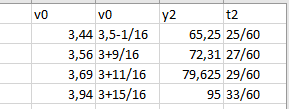
La vitesse dans Tiny Toon est encodée exactement dans le même format à virgule fixe 4b.4b que je n'ai vu que dans SMB3 (même pas dans SMB1), en général c’est plutôt du 8b.8b (voir du 3b.5b). [...] La même force de gravité faible de 0.06 tant qu’on maintient le bouton saut (comme si on était sur la Lune) et une force de gravité forte de 0.31 (retour sur Terre) quand on lâche le bouton ou que la vitesse verticale passe en dessous des 2 pixels par frame (donc quand on approche du sommet du saut). [...] [on va retrouver] strictement les mêmes 5 valeurs d’impulsion à la décimal prêt (respectivement 3.44, 3.56, 3.69, 3.94 et 4.00 ppf). La seule chose qui diffère c’est la valeur qui sert à caper la vitesse max de chute qui, comme pour la glissade en pente, est plus basse dans TTA.

Petite précision: cette histiore de 4,4 (ou 4b.4b selon la formulation d'Upsilandre) signifie que toute vitesse est exprimée en un nombre entier de 16 de pixel/frame. et on peut aller de -16 à +16 pixels par frame (mais personne n'ira jusque là). Du coup, 0.44 c'est 7/16, 0.56=9/16, 0.69=11/16 et 0.94=15/16. Déjà beaucoup moins surprenant. Notons au passage que la gravité lunaire de 0.06 pixels/frame² correspond à une simple décrémentation de la vitesse en 4,4bit. C'est 1/16eme. Tout simplement. Sur un processeur tel que le 6502, si on peut décrémenter plutôt que de soustraire 2, c'est toujours ça de pris.

The most interesting part is that the game uses two different gravity values. the 'ramp up' part of the jump uses the lowest possible gravity the game can deal with, of 1/16th pixel per frame². The switch to another gravity happens when we reach a vertical speed of 2 pixels/frame (or if the button is released), and we then go for 5ppf².

The impulse value may seem surprising, especially when expressed as decimal values like 3.69ppf. In fact, they integrate to nicely integer jump height expressed in Super Mario Blocks. What it means is that any game that wants to use the same gravity as SMB3 and a map made of 16-pixels blocks is likely to need the same impulse values as well.

Mais pourquoi ces valeurs-là ?
C'est le moment de ressortir un autre vieux post où on reverse-designait Super Mario World. Le game design forum y pointait que tout se mesure en bloc, dans le monde de Mario. Y compris la hauteur et la longueur des sauts. je ne serais pas surpris de découvrir que les impulsions correspondent aux vitesses qui permettent de franchir un obstacle de 3, 4, 5 ou 6 blocs le plus justement possible. Mais on a les valeurs, donc vérifions!

Voilà donc: selon l'impulsion initiale (v0), la hauteur atteinte (y2) au moment où la vitesse vaut 2 (et où on applique une gravité "normale" proche de 5/16 ou 6/16 ppf²). Avec en prime le temps mis pour y parvenir. Les valeurs 'magiques' correspondent à un obstacle de 4, 4.5, 5 et 6 blocs respectivement.

During the fall down, the game physics makes the terminal velocity kicks in very soon. As soon as 2 blocks high, actually. It may be an important part of consistent air control, giving you equal chance to hit RIGHT and reach a platform regardless of how long you've been falling down. The quasi-linear ramp up with super-small gravity does its best to mimic that for gameplay symmetry and ensures that we don't need speeds near 1 tile/frame if we want to jump up to 6 blocks high, as 1 tile/frame is almost warp speed for a 8-bit game engine.

ça, c'est pour la montée en gravité lunaire. Avec une gravité de 5/16, il faudra 22 frames pour tomber de 65 pixels de haut, mais 2 frames plus tard, on aurait déjà franchi 80 pixels. Enfin, ce serait en supposant que les programmeurs de SMB3 n'aient pas mis une 'terminal velocity' pour la chute libre en-dessous de 6ppf². En réalité, comme le fait remarquer Upsilandre, la vitesse de chute est limitée à 4+5/16 ppf par la "friction dans l'air". La mini-gravité en début de saut est essentiellement là parce que le gameplay veut une hauteur qui ne devrait pouvoir être atteinte qu'avec une vitesse de chute supérieure à cette vitesse terminale. Sans ça, il faudrait une impulsion de plus de 7+8/16 ppf pour dépasser 6 blocs de hauteur. On s'approche dangereusement de la limite de 1 tile / frame à partir duquel le code de détection de collision avec le niveau doit être radicalement modifié.

Au final, 

  • la descente de Mario est principalement linéaire. Il n'y a accélération que pendant les 2 premiers blocs (1 mario) de hauteur.
  • la montée de Mario n'est pas strictement linéaire, mais la gravité est si faible que la différence est à peine perceptible. Elle va surtout agir comme un compteur intégré de frames de montée forte avant de passer à la phase 'sommet du saut'
  • le changement de gravité au moment de relâcher le bouton offre une alternative sympa à ma solution de "forcer la vitesse de saut à -2 si on relâche le bouton [et que...]" 

edit: j'en profite pour sortir d'un vieux draft un autre schéma 8-bit d'upsilandre: la comparaison des courbes d'accélération de différents personnages.

edit+: en comparaison, Gomez ne sait sauter que par-dessus un obstacle de 2 blocs de haut mais peut s'accrocher à un rebord à 3 blocs de hauteur. Plus approprié pour un jeu de puzzle comme FEZ.

Friday, June 11, 2021

Running like Mario

I had my 'Mario Story' book in hands again a few weeks ago and met a quote that I wasn't expecting from Miyamoto-sensei. He was explaining that Mario's walk/run cycles deliberately not match the speed at which they move on the ground. I'd have expected it to be linked to the first Mario Bros game where "ground is slippy", but actually, the ground truth is that if they tried to make Mario's feet stick to the ground like a lemming, controls feel less responsive and gameplay isn't that fun.

Yes. You read it well. Mario's frantic feet speed and instant flip may make him feel slipping, but at least he's instantaneously responding to our controls, unlike some Prince I wouldn't name. And unlike my own character, to some extent.

Amusing timing, somewhat later, I discover 'New Super Mario Land', a homebrew title trying to rebuild Super Mario Land (GB) for SNES using graphics from New Super Mario Bros and a custom engine.

Eh bin, y'a des gars qui sont passés maîtres dans l'art de mettre une ROM pour SNES dans la cartouche d'une autre. Et ils ne se limitent pas à en profiter pour avoir une version 'hardware' d'un jeu introuvable plutôt qu'une énième copie d'un nanard à grand tirage. Non: ils peuvent aussi décider de faire ça avec un mod d'un jeu existant (disons Secret of Mana II traduit en Anglais ou Kaizo Mario World), une ROM homebrew comme le dernier titre d'Alekmaul ou en l'occurence, un remake de Super Mario Land avec des graphismes tirés de New Super Mario Bros.

And Nagler-- the homebrew author -- did what Nintendon't: they adjusted animation speed to the pixels
Mario travels. It's tricky to to say anything about the feel without playing it ourselves, but from the look of it, it definitely seems heavier to control than our usual mustachied plumber.

So finally, I'm pretty glad on only used the 'stick-to-the-ground' for walking and went for a more Mario-styled dont-care-the-ground for the run cycle. Still, I prefer Bilou's bending feet over Mario/Kirby 3D models with feet that hit the ground at weird angles, unaffected as if they were walking __through__ the ground instead of __on__ it.
Nagler, à qui on doit ce homebrew, a repris les étapes d'animations de Mario telles qu'on les trouve dans la version NDS mais a recodé toute la partie 'moteur de jeu', et en partie 'quelle image jouer à quel moment'. On aurait pu trouver meilleure illustration du choix de Miyamoto-sensei rapporté dans l'Histoire de Mario (p. 240)

Lors du développement de Popeye, il avait d'abord tenté de reproduire les gestes du marin en calquant le dessin animé image par image, mais le rendu [...] ne convenait pas au rythme frénétique d'un jeu vidéo. Plutôt que de modifier son allure, Miyamoto décide d'accélérer le mouvement des jambes sans toucher à la vitesse.

 Tout l'inverse de ce que j'ai cherché à faire avec la marche de Bilou, en fait. Heureusement j'ai changé d'approche pour la course.

edit: eh bien par contre, si on fait bouger les jambes trop lentement plutôt que trop vite, ça donne vraiment des résultats peu convaincants (vidéo de Aer où l'animation de la course est jouée au ralenti par rapport à la vitesse de déplacement).

Monday, February 15, 2021

Your First Koopa ...

As I was enjoying my free week of Super Mario on Switch, I found it interesting to compare how we are introduced to Koopa Troopa mechanics in Super Mario episodes. Because, yeah, I'm fond of Koopas mechanics. 


Koopas are dangerous, but you can turn them back at their allies (same for dumbladors, you'd say). And you can dispatch many of them at once that way (unlike dumbladors) if you follow it closely enough. But then it can trick you if it bounces on a wall.

In SMB1, you're welcome to kick in and dispatch 2 goombas, then another 4 if you're running after the shell, but then it will bounce back at you. To some extent, your first experience with Koopa Troopa is the full experience. Dangerous/helpful/treacherous. You're warned: this is what the game has for you.

You'll have to clear about one half of that level before you can see your first koopa, though. And you can easily miss the only one of the level if you take the secret pipe.

SMB3 comes with something new for you. Koopas shells can now be used to unlock contents of question blocks that lay on the ground. This can be discovered from the very second screen of the first level!
 
Note how you can decide not to face it by sneaking under the green block or escalading the pink and white blocks to easily jump past it. Note, too, how the shell bounce on the question block may be harmless as it will be cleared out through that 'under green block' route, optionally dispatching a goomba. (That might possibly be a bit too much complexity packed into one first screen, but it surely offers you plenty of alternatives and replay value).
 

Weird enough, the first koopa in SMW is not in its shell. It falls towards you at the very start of the level, giving you only a few seconds to find the JUMP button. Its shell awaits you nearly half a level away, ready to let you discover you can kick things upwards. 

But we all know the real first level in SMW is Yoshi Island 2, where plenty of koopas await you, harmless unless you decide to face them, and a free shell ready to line them up for a free 1UP

When you do so, there is high chance that the shell will eventually slip past the edge of the screen and be discarded by the game engine. You're safe. pfewh. You'd have to race the shell for more than half a level before it eventually bounces on a solid stairs-like structure.

This, my friends, is the price to pay to have a 'first' level where you have no risk of falling into a pit before 3/4th of the level.